Showing posts with label #Wildlife #WildlifeNationalParks #NationalParksinRajasthan #Indiatourism #RajasthanTourism #RajasthanWildlifeTours. Show all posts

Monday, August 9, 2021

Wildlife Travel Packages in Rajasthan


Rajasthan is home to some of the most famous and highly visited wildlife sanctuaries as well as national parks. Those who have interest in visiting wildlife sanctuaries can now make the most of wildlife travel packages in Rajasthan which also takes you to some of the offbeat destinations. There are many underrated national parks and wildlife sanctuaries in Rajasthan. Here you will learn about three off beat wildlife sanctuaries and national parks.

Ranthambore Tiger Reserve

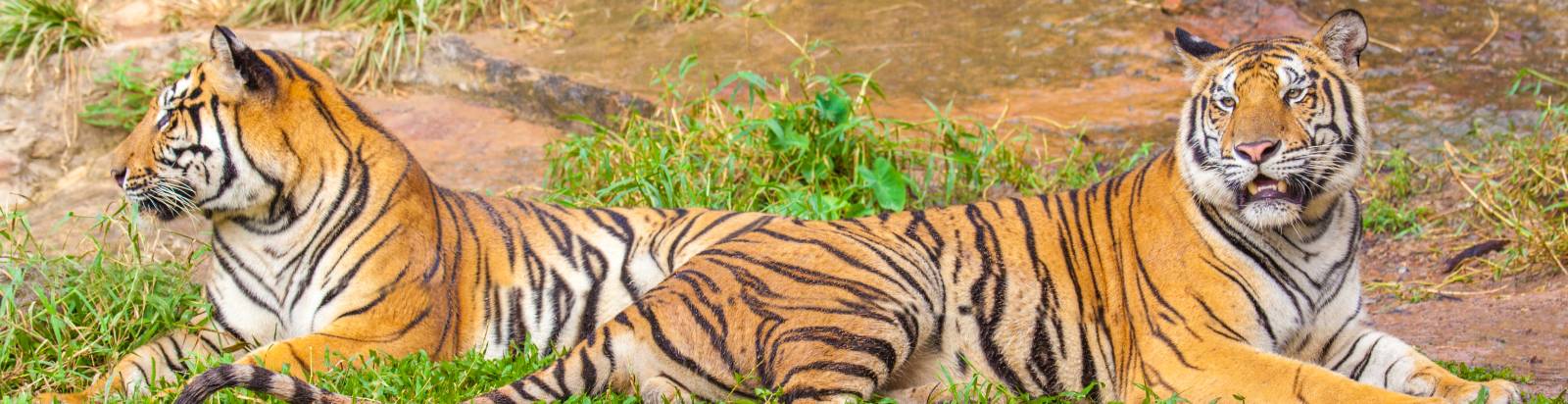
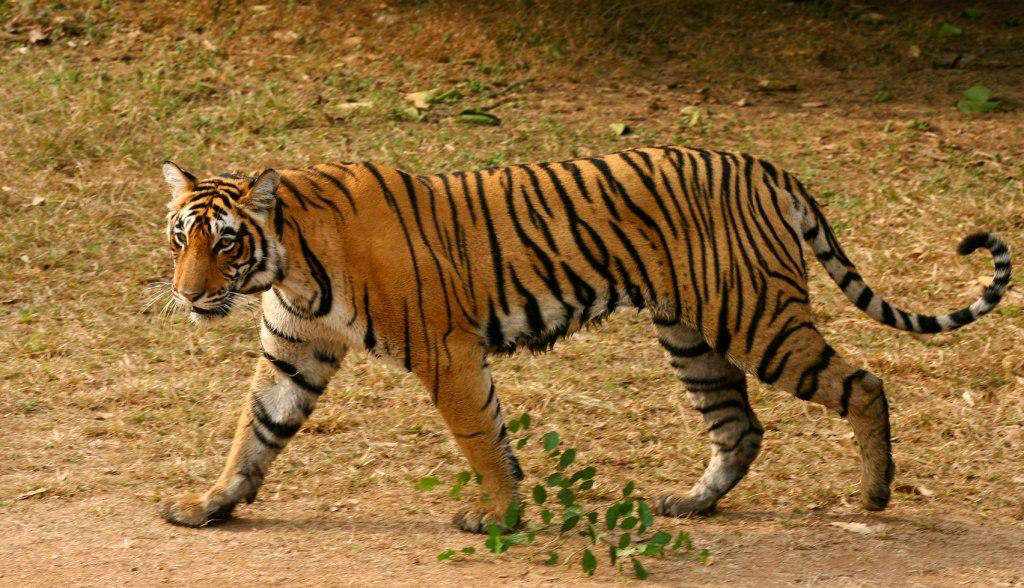
Ranthambore Tiger Reserve, before a princely game conserve is the scene where the celebrated Indian Tiger is best seen. Ranthambore Tiger Reserve lies on the junction of Aravali and Vindhyas just 14 Kms from Sawai Madhopur in Eastern Rajasthan. It sprawls over a varying and undulating landscape. The scenery changes dramatically from gentle and steep slopes of the Vindhyas and sharp and conical hills of the Aravali. A tenth century fort also blends amicably with the background. Pure sands of Dhok (Anogeissus pendula) interspersed with grasslands at the plateaus, meadows in valleys and luxuriant foliage around the canals make the jungle. Three big lakes – Padam Talab (meaning Lake), Malik Talab and Raj Bagh – are similar turquoises studded in the vast forest that abounds with aquatic vegetation including duckweeds, lilies and lotus.
The Rich Wildlife of Rajasthan | National Parks & Wildlife Sanctuaries

A significant geological feature within the park is the 'Great Boundary Fault' where the Vindhaya plateau meets the Aravali range. The Rivers Chambal in the South and the Banas in the North bound the National Park. The park is dotted with steep rocky hills and the dominating architecture of Ranthambhor Fort (built in the 10th century), adds to its landscape. The rugged park terrain alternates between dry deciduous forest, open grassy meadow, dotted by several lakes and rivers that are only made passable by rough roads built and maintained by the Forest Service.The tiger is not the only attraction at Ranthambore although it is the one park resident that people come to see. A variety of birds including Owlets, the ubiquitous Langur (monkey), Leopard, Caracal, Hyena, Jackal, Jungle Cat, marsh Crocodiles, Wild Boar, Bears and various species of Deer are the other attractions.

Sariska Tiger Reserve

Sariska Tiger Reserve is situated only 200 km from Delhi and 107 kms from Jaipur. Although larger than Ranthambor, it is less commercialised and has less tigers but a similar topography. It covers an area of 800 sq km in total, with a core area of approximately 500 sq km. The Northern Aravali Hills dominate the skyline with their mixture of sharp cliffs and long narrow valleys. The area was declared a sanctuary in 1955 and became a National Park in 1979.

Reopening of Wildlife Tourism in Rajasthan - Outlook Traveller

The landscape of Sariska comprises of hills and narrow valleys of the Aravali hill range. The topography of Sariska supports scrub-thorn arid forests, dry deciduous forests, rocks and grasses. The broad range of wildlife here is a wonderful example of ecological adoption and tolerance, for the climate here is variable as well as erratic.

It is located in the contemporary Alwar district and is the legacy of the Maharajas of Alwar. Pavilions and Temples within Sariska are ruins that hint at past riches and glory. The nearby Kankwadi Fort has a long and turbulent history.In morning and evening, wildlife in Sariska heads towards the many water holes, which litter the park, thus providing the guests with their best chance of viewing game. At some of these watering holes it is possible to book hides which are situated in prime spots for wildlife viewing.
Ranthambore National Park | National Park in Rajasthan - HappyTrips | Times  of India Travel

The park is home to numerous carnivores including Leopard, Wild Dog, Jungle Cat, Civets Hyena, Jackal, and Tiger. These feed on species such as Sambar, Chital, Nilgai, Chausingha, Wild Boar and Langur. Sariska is also well known for its large population of Rhesus Monkeys, which are found around Talvriksh.

So, while choosing wildlife travel packages in India, make sure that you do include above slated three parks and sanctuaries.

Saturday, August 7, 2021

The Beauty Of Wildlife In Rajasthan


Encounter The Beauty Of Wildlife In Rajasthan
Rajasthan is situated in the northwest corner of India spanning an area of approximately 3,42,000 Sq km. Being one amongst the largest states of the country, Rajasthan is extraordinarily rich in National Parks and Wildlife Sanctuaries. A varied topography will be considered as another feature of Rajasthan tourism among grand palaces, splendid forts, sand dunes and superb heritage resorts and hotels. In short, Rajasthan is said to be a haven for a broad spectrum of wildlife. With diverse topography, Rajasthan provides an inspiring array of wildlife. All the national parks & wildlife sanctuaries boast of a huge variety of birds and animals.  Some of them will be rare, whereas others are endangered. So, join the grand Indian wildlife tours to experience the thrill and excitement of wildlife. Wildlife tours offer a perfect tour detail regarding the national parks & sanctuaries situated in the desert state of Rajasthan.

Rajasthan Wildlife Tour, Rajasthan Wildlife Tour Packages, Wildlife Safari  in Rajasthan

A brief history behind Rajasthan Wildlife Tourism :-
The quality of our human life will depend on the continued survival of wildlife as well as wilderness. Leaving palaces, forts, traditional art forms and sand dunes aside – Rajasthan is surprisingly the abode of a huge number of birds and animals with distinct vegetation too. Furthermore, the state enables you to get benefit from the best safaris as well. This desert state has nearly three national parks in addition to a dozen of sanctuaries. The diversity of flora and fauna that you would come across in the Rajasthan could not be found anywhere in the world.

10 Nights 11 Days Rajasthan Wildlife Tour

Highlights of Wildlife in Rajasthan :-
Every year, Rajasthan captures the minds of several bird lovers and wildlife enthusiasts from all over the world. You could also able to get pleasure from an exhilarating Rajasthan wildlife tour in order to encounter its exclusive flora and fauna. The jagged park terrain varies between open grassy meadow and dry deciduous forest, which is dotted with several rivers and lakes that are made passable only by rugged roads constructed and also maintained by the Rajasthan forest service. Another greatest attraction that you could enjoy, while touring to Rajasthan wildlife, is exciting wildlife safari. You can get thrilling from several options including camel safari, jeep safari and even horse safari. Enjoy a close encounter with beautiful birds and wild beats in their individual home. There is also an availability of boat safari that will give you an unforgettable experience.

National Parks In Rajasthan: Top 16 National Parks & Wildlife Sanctuaries  In Rajasthan

Major attractions of Wildlife in Rajasthan :-
Some famous national parks and wildlife sanctuaries in Rajasthan include Ranthambore National Park, Kumbhalgarh Sanctuary, Sariska Tiger Reserve, Sitamata Sanctuary, Keoladeo Ghana National Par, Gajner Sanctuary, Tal Chappar Wildlife Sanctuary, Mount Abu Sanctuary, Darrah Sanctuary and Desert National Park. However, the major national parks, as well as bird sanctuaries, are Sariska Tiger Reserve, Ranthambore National Park and also Bharatpur Bird Sanctuary. Ranthambore National Park is specially meant for Project Tiger. Among other creatures, tourists could watch birds such as Langur, Owlets, Caracal, Leopard, Hyena, Jungle Cat, Jackal, Bears, Wild Bear, Marsh Crocodiles and different species of Deer too.

Rajasthan Wildlife And Bird Sanctuary Tour Packages Service in Karol Bagh,  New Delhi, L A Travel Merchants | ID: 19298904462


Best time to visit wildlife tour in Rajasthan :-
The best time to enjoy Rajasthan wildlife tour is between October and June as most of the national parks and sanctuaries will be open for visitor only during this time period.

Rajasthan Wildlife Tour


Rajasthan Wildlife Tour is designed for wildlife photographers and enthusiasts. This tour takes you for safari at the prominent national parks of Ranthambore and Bharatpur for safari and bird watching. Destinations such as Agra, Jaipur, Pushkar, and Samode are also explored to witness the historical monuments.

Rajasthan Wildlife Tour, Rajasthan Tour Packages

Day 1: Delhi Arrival
Upon your arrival, you will be picked up by our staff member and escorted to your pre-booked hotel for some rest, the rest of the day is at leisure. Delhi is a hub for food junkies and Shopaholics, you can pay a visit to Paratha Gali of Chandani Chowk to try some delicious Indian food and Hauz Khas for shopping. Overnight stay at the hotel.

Day 2- Delhi excursion
Post breakfast, your Delhi excursion will begin with sightseeing of Qutub Minar- A 234 feet high minaret which was built by Mughal emperor Qutub-Ud-Din Aibak, India gate which was is a war memorial dedicated to the soldiers of first World War and lotus temple which is a fine example of the modern style of architecture with its 27 petal shaped marble leaves. Post this, you will pay a visit to the Red Fort which was a major political and ceremonial center of Mughal Dynasty. This fort is made of red sandstone in the Mughal style of architecture. You can surprise your taste buds with spicy street food of Delhi during the excursion. Overnight stay at the hotel.

Day 3- Delhi-Agra transfer and excursion
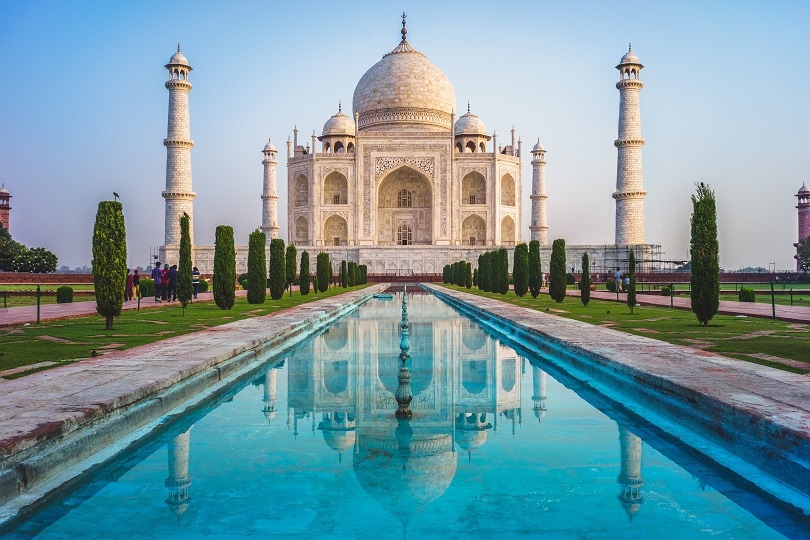
Post breakfast, you will be transferred to Agra which is known for the former seven wonder – Taj Mahal. It was built by Shah Jahan in memory of his late wife Mumtaz Mahal who died during childbirth. It was built in 1643 with the help of 20,000 artisans by white marble. Upon arrival at Agra, you will be escorted to your hotel for some rest. You will visit this magnificent piece of art in the evening where you can enjoy the beauty of the Taj and Yamuna River with sunset. You can try the sweet delicacy of Agra ‘Agra Petha’ on the streets outside Taj and Mughal cuisine in Agra as well. Overnight stay at the hotel.

Best Things To Do In Agra - Top Activities & Attractions


Day 4- Agra-Bharatpur transfer via Fatehpur Sikri
Post breakfast, you will be paying a visit to the Agra Fort which was a major residence of Mughal era before Delhi. Post-excursion of this site you will be taken Jaipur where in the middle of the route, approximately 35 KM away from Agra, you will be taken to Fatehpur Sikri which boasts of world’s biggest gateway built by Mughal Emperor Akbar to memorialize his victory over Gujarat. You will visit the Panch Mahal, Jodha Bai’s Palace and the Tomb of Salim Chishti which is considered one of the finest examples of the Mughal style of architecture. Continue for Bharatpur. Transfer to the hotel followed by an overnight stay.

Day 5: Bharatpur
After taking breakfast at your prebooked hotel, you will set out to explore Bharatpur. You will visit the 18th-century fortress, Lohagarh Fort, which has a number of monuments and also the Laxman Mandir, an ancient Hindu Temple. You will go to the Keoladeo National Park which is a UNESCO World Heritage Site and a renowned bird sanctuary. You can then visit the Rope Castle Adventure Park to have some adventure activities. Overnight stay at a hotel.

Day 6: Bharatpur – Jaipur
Depart for Jaipur and after arrival, you may take some rest at your pre-booked hotel and check out the local Bazaar for traditional souvenirs. You may also plan to visit Chokhi Dhani resort to try the flavorful cuisine and folk dance of Rajasthan. Overnight stay at a pre-booked hotel in Jaipur.


Jaipur - India Journey Destination - Micato Luxury Safaris


Day 7- Jaipur excursion
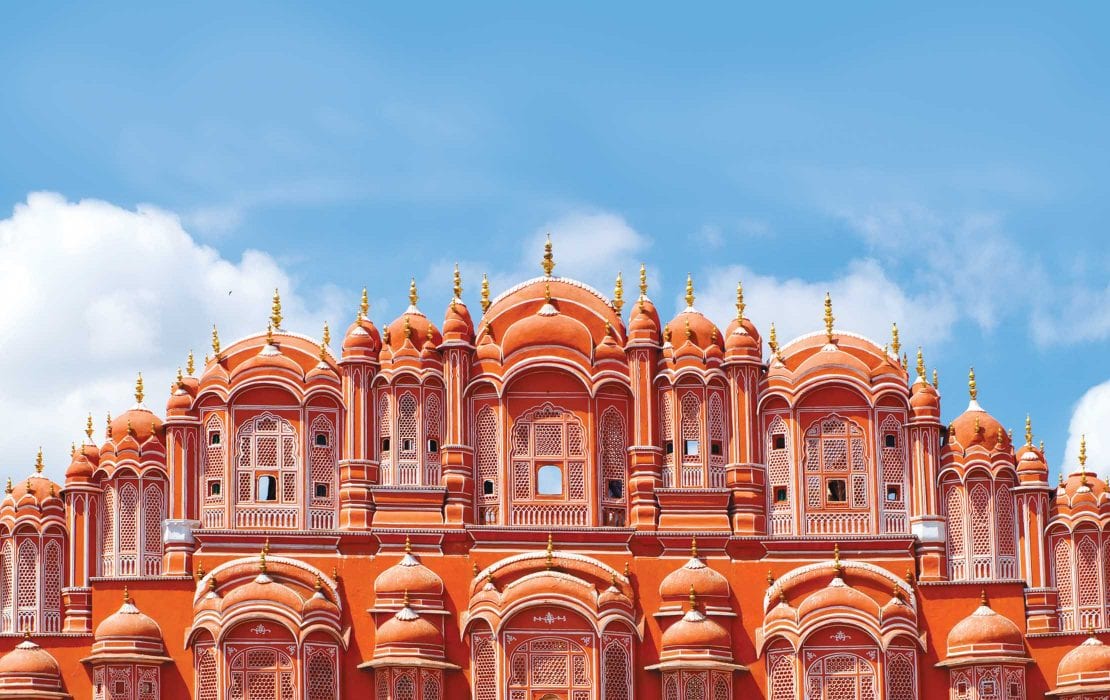
The Pink City of Rajasthan is dotted with lots of heritage destinations that amaze every traveler who come to visit India. Post breakfast, you will be visiting Hawa Mahal palace or the wind palace with 953 windows and Jantar Mantar which is the biggest astronomical observatory to observe celestial objects with the naked eyes. Next to Jantar Mantar lies the City Palace, Jaipur which was once the home to the members of the royal family. Thereafter, you can visit the most renowned museum in Jaipur, Albert Hall, the oldest State Museum of Rajasthan which houses various artifacts, porcelain, Brahma Statue, Buddhist mural, and Lakshminarayan statue. You can gather some souvenirs from Bapu Bazaar and beautiful gemstones and jewelry at reasonable prices form Johri Bazaar of Jaipur. Overnight stay at the hotel.

Day 8: Jaipur - Ranthambore
You will leave for Ranthambore and spend the rest of the day exploring the surrounding areas. Overnight stay in a hotel.

Rajasthan Wildlife Tour, 10 Days and 09 Nights Rajasthan Tour


Day 9: Ranthambore National Park - Pushkar
You will kick-start your day a good cup of coffee and a hearty breakfast, after which you will visit the famous Ranthambore National Park which is home to a number of species of wild animals including tigers and sambar deer along with 539 species of flora. Other major attraction here, is the majestic Ranthambore Fort which is a 10th-century Fort with 3 red Karauli stone temples. Close to the fort is the Lake Padam Talao. You can also visit the Jogi Mahal and click pictures with India’s second largest banyan tree.  Post Jungle safari, you will be transferred to Pushkar and escorted to your pre-booked hotel for the overnight stay.

Pushkar – Safomasi


Day 10- Pushkar excursion
Pushkar is a small town situated in the laps of Aravali mountain range, mostly visited by Hindu pilgrims throughout the whole year. Post breakfast, you will be taken to the Pushkar Lake which is considered a holy lake according to Hindu Mythologies and ancient Brahma temple which was built in the 14th century. The rest of the day is at leisure you can visit the Sarafa Bazaar to buy some good quality leather goods, traditional jewelry, and clothes. Overnight stay at the hotel.

Day 11: Pushkar – Samode
Post breakfast, you will explore the Samode fort and palace which is famous for its atheistic values. You will also visit the Samode Haveli and will be transferred to the Shekhawati region of Rajasthan which is quite famous for its fresco paintings, traditions and old havelis constructed and decorated in Shekhawati style of architecture.
Overnight stay in Samode.

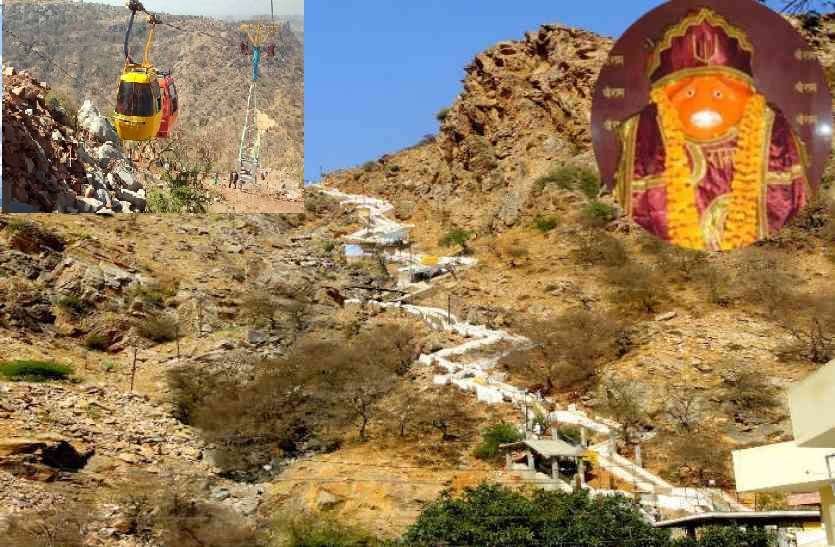
Good News : Ropeway Start For Samod Veer Hanuman Temple, Rajasthan -  खुशखबरी : राजधानी को मिली नई सौगात, समोद 'वीर हनुमान मंदिर' तक शुरू हुआ  रोपवे, 5 मिनट हुई दूरी, ये


Day 12: Samode – Delhi
Post breakfast, you will be transferred to Delhi where you can board your flight to set out on a new adventure.

Saturday, July 24, 2021

Top 05 National Parks In Rajasthan


Top 05 National Parks In Rajasthan

Rajasthan are barren desert lands, the rest of the land are are fertile and home to exquisite species of birds and animals. To preserve such endangered animals, the state has developed a large number of Sanctuaries and National Parks. All National Parks in Rajasthan are famous for unique things and attract tourists from all over the world. While it’s a big ask to list out all the numerous National Parks located in Rajasthan, the listicle below focuses on the best national parks in Rajasthan which you must visit during your tour.

1. Ranthambore National Park – Day Long Tour

This sprawling National Park in Rajasthan is spread over 282 sq. km. It had been originally established as the Sawai Madhopur Game Sanctuary by the Indian Government in the year 1955. But later, it was converted into Project Tiger Reserve in the year 1973 with the declaration of it to become a National Park from November 1980. The adjoining forest area was declared as the Sawai Man Singh Sanctuary and Keladevi Sanctuary respectively.

Subsequently, Ranthambore National Park in Rajasthan has come to be known as the Sawai Madhopur Park also. The park is home to the Bengal Tiger and is a sought after place in India for tourists seeking a glimpse of this majestic animal in its natural habitat. It is also famous as a heritage site due to the presence of a large number of historical ruins across the huge park. A visit to this park is a visual joy of assessing its seething natural environment, rare types of trees and protected animals roaming about freely during the day time.

The terrain in this National Park in Rajasthan is of twin nature. At some places, dry deciduous forest area stretches across miles – while a few green grassy meadows can also be witnessed here. The park offers adventurous Safari rides where tourists need to book well in advance. Usually, such rides start at fixed times of 6.30 AM and 2.30 PM every day of the week.

2. Keoladeo National Park – Evaluating Nature And History

Being a UNESCO World Heritage Site and more popularly known as Bharatpur National Park, Keoladeo National Park is virtually a bird-hive. Ornithologists from worldwide locations frequently visit this park to have a glimpse of some of the rarest species of birds. Nearly 250 species are known to reside here while thousands of species including famous Avifauna and Siberian Cranes migrate during the cold season.

Strategically located between Agra and Jaipur, it is considered as one of the most famous national parks in Rajasthan. The park is a shelter to mammals like Golden Jackal, Striped Hyena, Fishing Cat, Jungle Cat, Nilgai, Sambar, Blackbuck and Wild Boar amongst others. Large pythons are also visible while hibernating during the cold season. Spread over an area of 29 sq. km., Bharatpur National Park in Rajasthan is famed for the well-demarcated trekking paths.


Tourists can either hike or bike on this path. Alternatively, human-pedalled rickshaws are also available for hire. It is a pleasure to experience an early morning or late evening boat ride in the lake. Intermix of dry deciduous forests and grasslands with sparse vegetation are the hallmarks here.

3. Sariska Tiger Reserve – Home To A Variety Of Rare Birds

The erstwhile Sariska Wildlife Sanctuary is now known as Sariska Tiger Reserve. It is snuggled in the Aravali Hills over a vast expanse of 800 sq. km. Dry deciduous forests, grasslands, cliffs and rocky mountainous areas dot this National Park in Rajasthan. This picturesque park is home to a wide variety of animals including Bengal Tiger, the protected Nilgai Cheetah, Wild Boars, majestic Sambars, Indian Leopard, Jungle Cat, Mongoose and Monkeys.

Sariska Tiger Reserve is also home to a variety of rare birds including white-throated Kingfisher, Indian Peafowl, Partridge, golden-backed Woodpecker et al. It is a virtual paradise for bird watchers.

This park hosts numerous tourist attractions like Bhangarh Village, Kankwari Fort, Temple of Neelkanth, Hanumanji Temple, Sariska Palace and Viratnagar to name a few. Bhangarh village is renowned for the historical ruins and is a known haunted location. The Sariska Palace was an abode of royal family for hunting expeditions. Viratnagar hosts Buddhists relics dating back to the 3rd and 4th centuries.

4. Mount Abu Wildlife Sanctuary – Hub For Numerous Sightseeing Spots

This Wildlife Sanctuary is located in the Aravali Mountain Ranges which are considered to be the oldest mountains in India. It is a plateau – 19 km in length and 6 km in width with its altitude ranging from 300 to 1,722 meters above the mean sea level. It is a hub for numerous sightseeing spots and remains a perfect destination to view the best of wildlife across Rajasthan.

Mount Abu is a hill station rich in biodiversity comprising of the sub-tropical thorn forests in its foothills. Many herbal medicinal plants are abundantly found here. Tourists can view a large variety of Orchids as well. The southern-western part of this park is rich in the bamboo forests. Rich haul of fauna finds place in Mount Abu Wildlife Sanctuary. Most endangered species of Jackals and Hyena are also found here. Apart from these two species, a large variety of animals like Hedgehog, Indian Fox, common langoor, Mongoose and Wild Boar are abundantly found here. The captivating Mount Abu Wildlife Sanctuary is one of the best places to visit in Mount Abu, Rajasthan.

Best Time To Visit: Winter months stretching from October to March are ideal months to visit.

Fees: Jeep safari service is available for tourists convenience. The safari ride costs upwards of INR 300 per person and takes 3 to 4 hours to complete.

5. Desert National Park – Popular For Its Diverse Wildlife Species

This national park in Rajasthan is located in the Thar Desert. Soread across 3162 sq.km, the major wildlife of the park is Black Buck, Wolf, Indian Bustard, Desert Fox. What makes this national park different from others in Rajasthan is that it mainly comprises of sand dunes, craggy rocks and a source of vegetation.

The park is popular for its diverse wildlife species and an ideal site to spot wildlife in Rajasthan. The park also offers jeep safari ride. You can witness its unique charm and spot Indian Bustard, Larks, Demoiselle Cranes, Falcons, Sandgrouse, Partridges, Tawny Eagles, Houbara Bustards, and Bee-Eaters which are some of the most commonly found birds. Apart from this, you can also see Bengal Fox, Desert Fox, Monitor Lizard, Blackbuck, to name a few other rare wildlife species.

Sacred Char Dham Yatra Tour Packages from Krishna India Tour

   Char Dham Yatra – A Sacred Journey Through India’s Holiest Pilgrimage Introduction The Char Dham Yatra is one of the most sacred pilgrima...