Tuesday, September 7, 2021

Jaipur Ajmer Pushkar Same Day Trip


Jaipur Ajmer Pushkar Same Day Trip
Jaipur Ajmer Pushkar Same Day Trip Ajmer city is located at a distance of 135 km from the state capital Jaipur and 391 km from the national capital New Delhi. The city is surrounded by the Aravalli Mountains. It is a pilgrimage centre for the shrine of the Sufi Saint Khwaja Moinuddin Chishti and is also the base for visiting Pushkar (11 km), an ancient Hindu pilgrimage city, famous for the temple of Brahma.The total duration of tour is 12-14 Hours and you will get a professional & honest driver who can easily speak local and English Language.

Jaipur to Ajmer Pushkar One Day Tour | One Day Trip to Ajmer & Pushkar from  Jaipur | Jaipur Pushkar Tour Package- Ravi Tours India

Attractions in Ajmer & Pushkar
On this full day tour of Jaipur Ajmer Pushkar to explore the most famous Ajmer Dargah Sharif in Ajmer and Bramha Temple in Pushkar.

This same day Trip of Ajmer Pushkar sightseeing tour from Jaipur will take you to some of the most enchanting sites and monuments of these Holy cities. Enjoy the day trip to Ajmer and Pushkar with your family and friends. To get the best travel experience of Ajmer and Pushkar from jaipur in reasonable cost, simply book our Ajmer Pushkar Same Day Tour Package at Rajasthan India Tour Driver.
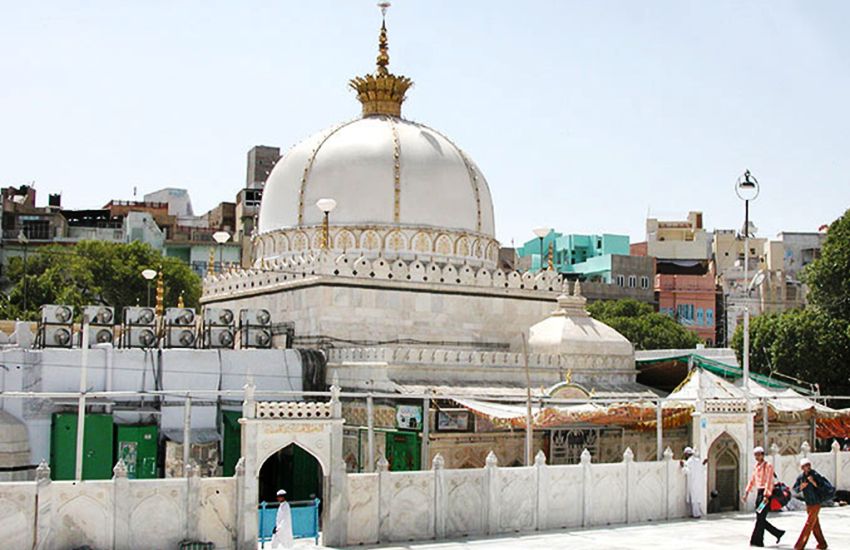
Ajmer Dargah - How to Reach, Timings, Interesting Facts About Ajmer Dargah-  Thomas Cook India

At 10:30 AM upon reaching in ajmer we will visit:-

- Ajmer Dargah Sharif
- Adhai Din Ka Jhopra
- Nasiyan Temple and Ana Sagar Lake

At 1:30 PM
- You will have your lunch at Ajmer and then proceed to Pushkar which is located just 30 minute drive from Ajmer.
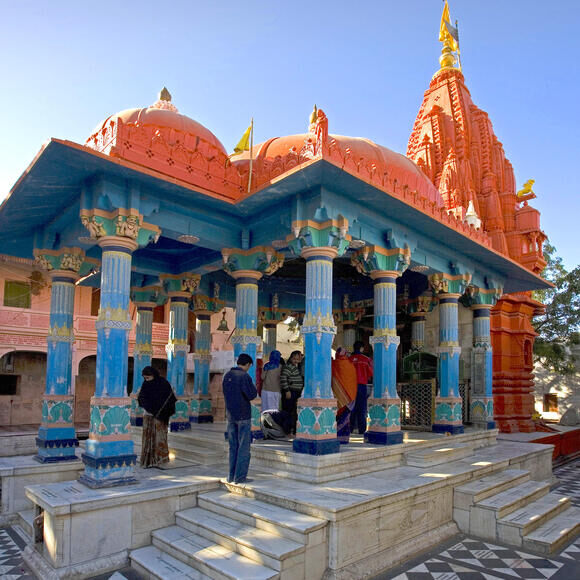
Pushkar Brahma Temple – Pushkar, India - Atlas Obscura

At Pushkar we will explore:

- Bramha Temple
- Pushkar Lake
- Savitri Temple, Varah Temple and Vaidhnath Temple

After this amazing full Day trip of Ajmer Pushkar from Jaipur our driver will take you back to Jaipur and drop you at your Hotel.We hope this One day sightseeing tour of Ajmer Pushkar from Jaipur will make a finest memory in your mind.

Salim Singh Ki Haveli Jaisalmer


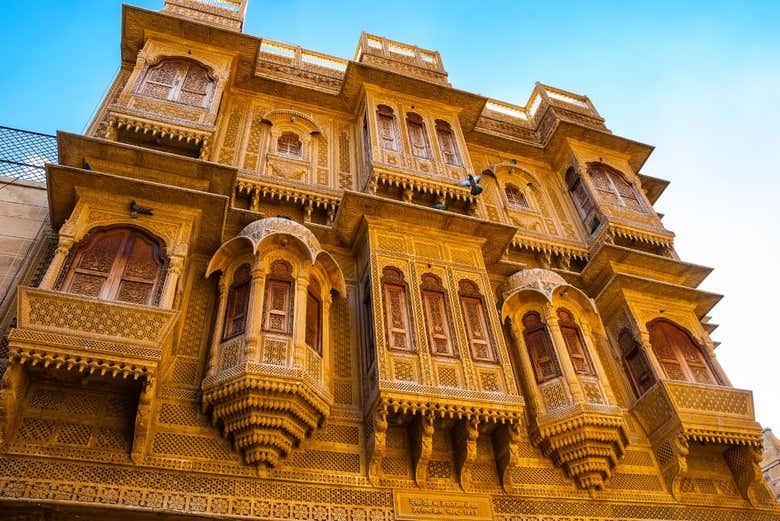
Salim Singh Ki Haveli Jaisalmer The various stately homes and havelis of Jaisalmer is a reflection of the fact that the city is an integral part of the rich history of Rajasthan. We had come out to get a taste of these havelis. Salim Singh ki Haveli is a magnificent 300 year old piece of architecture. The historical importance of haveli along with its architectural wonder makes it one of the most popular havelis in Jaisalmer. During our tour of Jaisalmer, we visited in this famous. In fact, Jaisalmer’s trips are often considered incomplete without a visit to this haveli.

Salim Singh ki Haveli Jaisalmer India - History of Salim Singh ki Haveli

The palace was built by Salim Singh. He built this palace during his regime as a prime minister of Jaisalmer. By visiting the haveli, you will also have the opportunity to learn a lot about the taste of Salim Singh. You will also learn how shrewd Salim Singh was. However, his growing ambitions proved to be his enemy as he was killed for his growth aspirations for the throne.

The various architectural features of Salim Singh ki Haveli is a great attraction for tourists. The haveli is a blue dome roof. It also has beautiful stone inlays, beautiful wall paintings and half-timbered wall paintings. The walls with shelf can not be ignored or as they are exemplary of excellent craftsmanship. We witness a chiseled screen of windows decorated with minute details will also be a pleasure for the eyes. These functions will be a testimony to the salient features of Salim Singh ki Haveli.

Salim Singh Ki Haveli, Jaisalmer: How To Reach, Best Time & Tips

Salim Singh ki Haveli also has a number of rooms, corridors and frescoes. However, as the story goes, haveli previously had two other stories. Currently it has only five stories as the two upper levels have been demolished as per the king’s order. The various architectural features often make visitors wonder about the skills of the craftsmen. The haveli also means the excellent skills of the artisans of the time.

Historical Background about Salim Singh Ki Haveli
At one point, Jaisalmer was the capital of Rajasthan, and the prime minister in 1815 was Salim Singh. He created a mansion with distinctive architecture, making the haveli a must-visit place. Interestingly, the legend has it that Salim Singh was not a very nice person. Having gone through childhood trauma, where he watched his father being killed by royal officials, he grew up hating the royals and wanted to avenge his father’s death by overthrowing the king.

Salim Singh Ki Haveli: A hidden gem that stands in solitude over desolate  history - Tripārambh

When he became the prime minister, he was vicious and cruel in his dealings with the people of the city, making him notorious for not being a nice person. In his quest for vengeance, he set out to build himself a structure, the haveli, which looked even grander than the King’s residence. He also ordered two extra stories to be built so that his haveli was taller than that of the king’s – which did not go down well at all with the king.

The royals were treated with great reverence and it was not heard of for people to try to slow them down – so the king ordered the demolition of the top two stories. This ended up making Salim Singh hate the king even more. Interestingly though, the structure is so beautiful, it seems almost strange that it could be built as a sign of vengeance!

Nathmal Ji Ki Haveli Jaisalmer


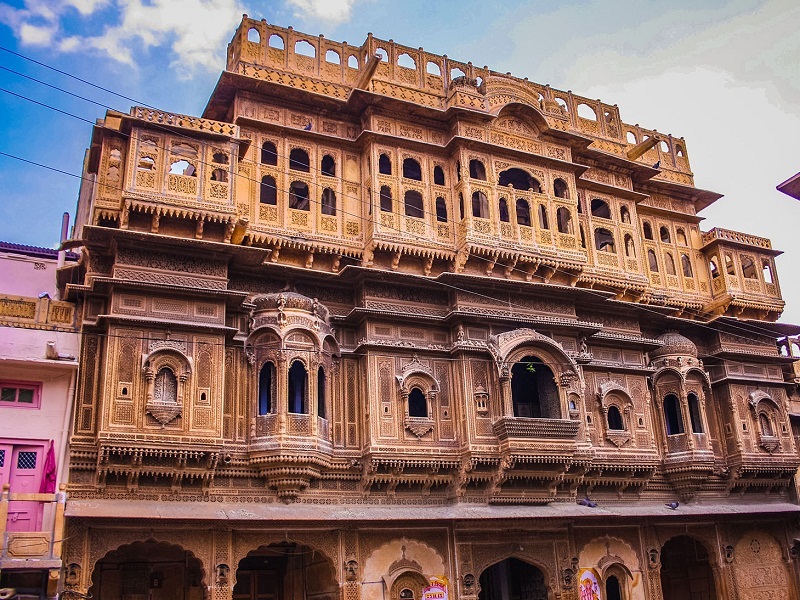
Nathmal Ji ki haveli was commissioned to serve as the residence of Diwan Mohata Nathmal, the then Prime Minister of Jaisalmer. Maharawal Beri Sal commissioned the construction of this Haveli. The architects of this haveli were Hathi and Lulu who happened to be brothers. There is a very interesting story regarding its construction. It is said that the two brothers started building different facets of haveli simultaneously. In those days there were no such instruments, which could keep a track on continuity and thus when this building came up finally it had irregular shape.

Nathmalji Ki Haveli, Jaisalmer - Timings, History, Best time to visit

Nathmal Ji Ki Haveli Jaisalmer
Barring that, this haveli is still considered the best in Jaisalmer in terms of grandeur. There are other minute details worth appreciation. For example there are two Elephants made of yellow stone. These life-size replicas have been put in front of the main entrance so that it looks as if they are guarding the Haveli. Other than these, there are pictures engraved on pillars and walls. These consist of Horses, Cattle, and depiction of Flora among other things. But the most interesting aspect of this haveli is the drawing of modern amenities such as cars, fans etc. It is said and believed that the Architect brothers dint see these things ever in their life and engraved it with mere help of their descriptions given by people who had seen it.

Patwon Ki Haveli Jaisalmer India - History of Patwon Ki Haveli

History of Nathmalji Ki Haveli
The haveli is named after Mohata Nathmal, who was the Prime Minister of Jaisalmer at that time. The haveli was constructed by his brothers, named as Lulu and Hathi. There is an interesting story behind the irregular shape of the haveli, it is believed that the brothers simultaneously started building this haveli but as did not have instruments to keep a track, ended up making a unique shaped building.

Thursday, September 2, 2021

Karni Mata Temple Deshnok :- Bikaner Attractions


Karni Mata Temple :-
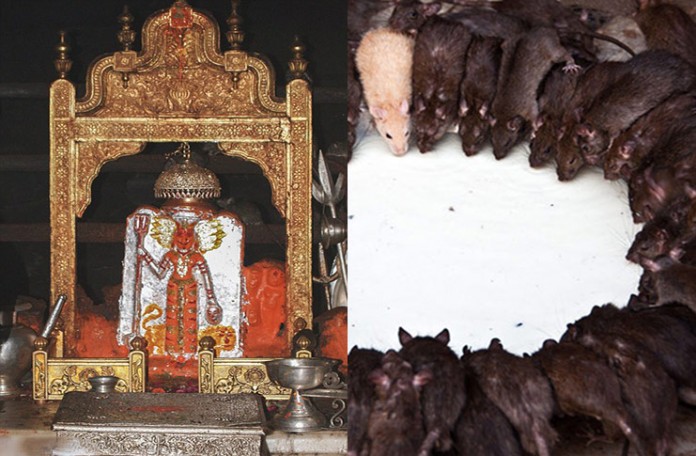
Bikaner is known for its mythical culture, magical temples and forts all across the globe. Karni Mata Temple is one of them. Located south of Bikaner, almost 30 km, Karni Mata Temple is also known as the Temple of Rats, or simply The Rat Temple. The temple houses over 20,000 rats, who are worshipped as mythical creatures. The temple is religiously visited by devotees, and also by curious tourists and travellers across the globe.

Karni Mata Temple - Wikipedia

Current Architecture
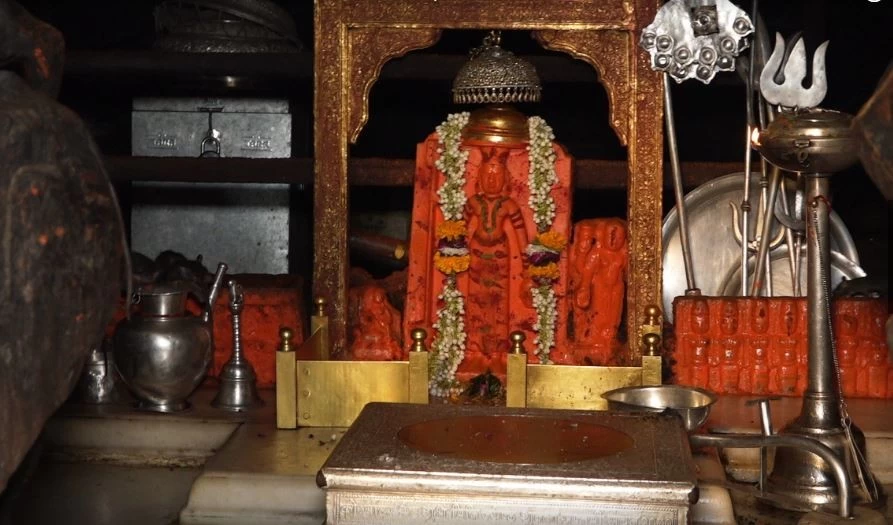
The current structure of Karni Mata Temple was built under the supervision of Maharaja Ganga Singh ji of Bikaner in the early 20th century. The Temple resembles Mughal architectural style, with a marble front and silver solid door, looking majestic and breathtaking. Walking further into the temple premises, you will be welcomed by a few more splendid silver doors that are a true depiction of several legends directly linked with Karni Mata. The inner sanctum of the temple houses Karni Mata in her full glory.

The year 1999 saw a few additions being made to the temple by Kundanlal Verma, owner of Hyderabad based jewellery store, Karni Jewellers. A magnificent marble carving and extraordinary silver gates were donated by him.

Karni Mata Temple Deshnok (Rat Mata) - Navratri Special

About the temple
Popularly known as the Karni Mata Mandir, this temple is the most called upon tourist attractions in Bikaner. The temple is dedicated to Karni Mata, who the locals believe is an incarnation of Goddess Durga, the protective Mother Goddess in Hindu religion. Karni Mata was a Hindu warrior sage from the Charan caste, who lived in the fourteenth century. Living the life of an ascetic, Karni Mata was highly revered by the locals and earned many followers too. Having received requests from the Maharajas of Jodhpur and Bikaner, she even laid the foundation stones of the Mehrangarh and Bikaner Forts. Although there are many temples dedicated to her, this temple in the town of Deshnoke at a distance of 30 kilometers from Bikaner is the mostly widely recognized.

Rajasthan Karni Mata Temple where more than 20,000 rats are fed, worshipped  - OrissaPOST

The Karni Mata Mandir in Bikaner is popular not for its location or architecture, but for being home to over 25,000 rats that inhabit and freely meander around the temple complex. These creatures can be seen emerging out crevices in the walls and floors, often passing over the feet of the visitors and devotees. Consuming food items that have been nibbled on by these rats is in fact regarded as a holy practice here. People from different corners of India and abroad come to witness this astounding spectacle and also bring milk, sweets and other offerings for these sacred beings. Out of all the rats, white rats are held specifically sacred as they are believed to be the incarnations of Karni Mata and her sons. Visitors put in enormous efforts to draw them out often through offering of sweets. However, hurting or killing a rat, even by mistake, is a serious sin in this temple. People perpetrating this crime will have to replace the dead rat with one made of gold, as penance.

Bhangarh Fort Alwar


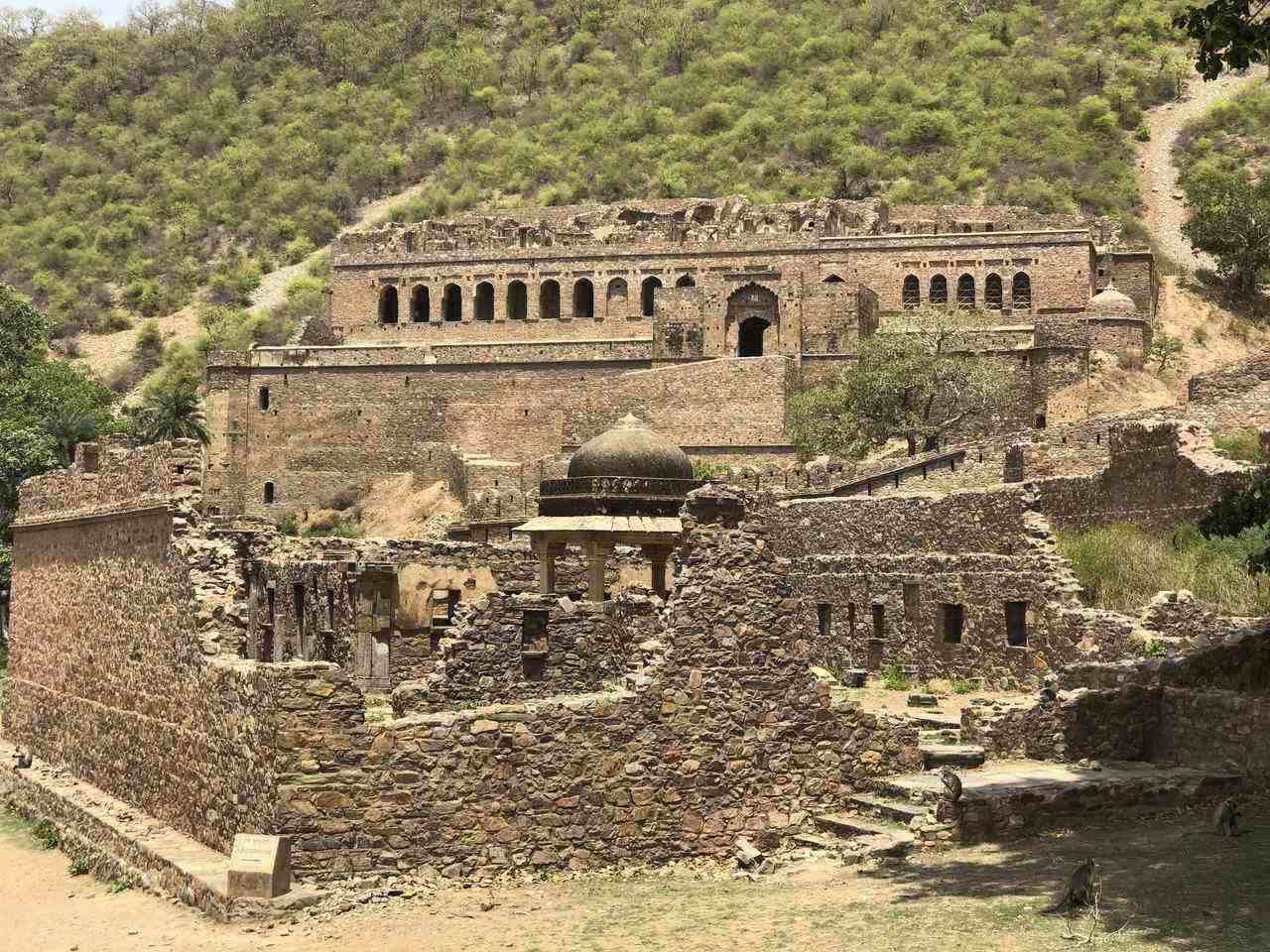
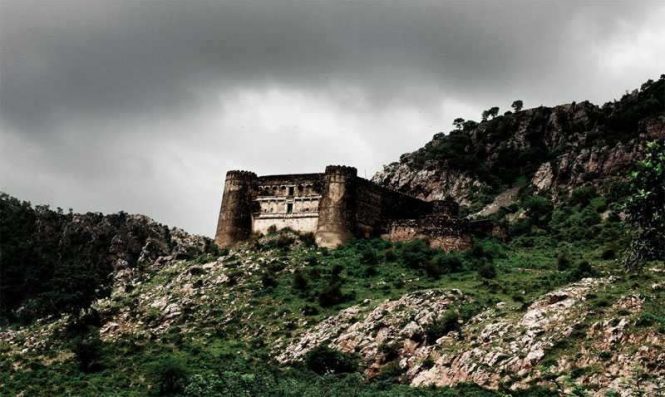
The fort of Bhangarh is located 50 kilometers from the Sariska Sanctuary between the city of Jaipur and Alwar. The fort was constructed in the 17th century by Raja Madho Singh, the younger brother of the great Mughal general, Man Singh of Amber. Besides the royal palace, Bhangarh had over 9,000 houses until 1720 after which it gradually diminished in population. The Bhangarh fort along with the whole township was protected by three successive fortifications and five massive gates. The fort houses remnants of grand havelis, temples and deserted marketplaces within its premises, indicating the fort’s prosperity in its heydays. Thought to be a haunted place, Bhangarh fort nevertheless attracts hordes of tourists owing to its seren

Bhangarh Fort Rajasthan - One of the most haunted ghost towns in India.

History of Bhangarh Fort
As the name suggests, Bhangarh fort is situated in Bhangarh village in Rajasthan’s Alwar district. A quick check on the Bhangarh Travel Guide will give you the technical details about its latitude and longitude, weather, temperature and about the hotspots of the area. What it will fail to highlight is the presence of the Aravali hills that act as a guard to the Bhangarh fort. A lesser-known fact is that Bhangarh itself is a prehistoric site with several temples in Rajasthan havelis that are the crowns of Rajasthan royalty.

Being a prehistoric site, the town of Bhangarh is an archeological site and is under the protection of Archeological Survey of India (ASI) and the same has a board placed at the borders of Bhangarh, stating that staying in the borders of the town before sunrise and after sunset is strictly prohibited.

The Beauty Known as Bhangarh Fort
A historical site in itself, the Bhangarh fort was built in the 17th century by Man Singh I who was a general in Akbar’s troops. The once flourishing town and fort suddenly became desolate and that left many people wondering, giving way to Bhangarh fort ghost story and legends we read about these days. However, before we proceed to the stories, here are a few things to know about Bhangarh Fort if you are actually planning a visit there. Firstly, the best time to visit the ruins is during winter when you can enjoy the trek uphill without gasping much. Secondly, do not go to the fort seeking just a brush with the paranormal, for Bhangarh and the fort is also beautiful and should be aesthetically viewed as well.

12 Things to Know About Bhangarh Fort Story - The Most Haunted Place in  India

The trip to Bhangarh fort is beautiful too, with the greenery around and the Aravali hills looming upfront. Another interesting thing is the fort is in close proximity to Sariska National Park which is a popular tiger reserve of India. Structurally, the fort is said to be inspired by the medieval Shahjahanabad city with massive wooden gates at the four sides and the sides of the precinct carved with ornate small temples and waterfalls to aid airflow, thereby keeping the space cool.

What catches attention is the fact that unlike a typical Rajput fort, the Bhangarh Fort is not built atop a hill, rather, the three green hills act as a barrier behind the fort. Once you enter the fort premises, you will be greeted by a vast expanse of ruins that lead up to a really old banyan tree – said to be over 300 years old. The fort itself has suffered less damage and once you are over the magnificence of the old tree, you will be greeted by the sheer beauty of the fort.

Wednesday, September 1, 2021

Bada Bagh Jaisalmer


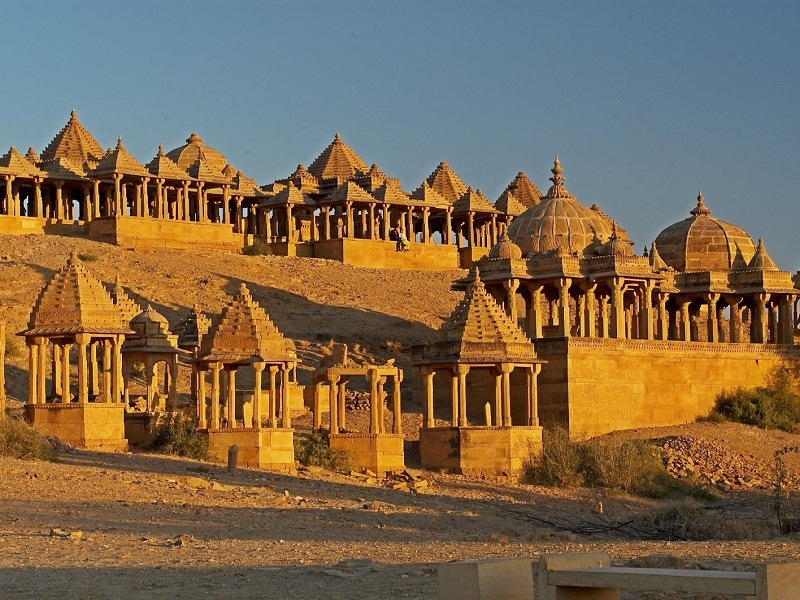
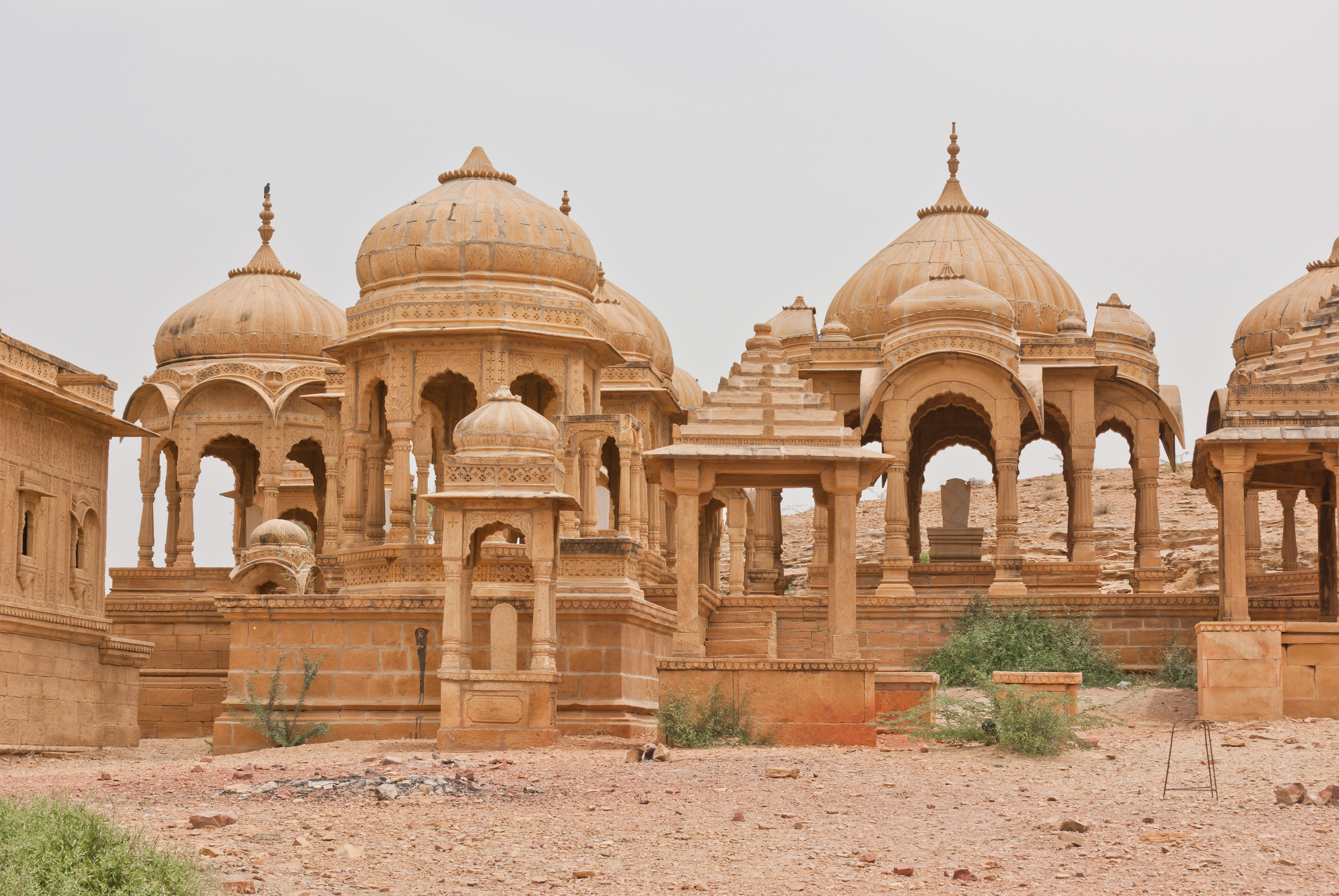
Bada Bagh Jaisalmer, travelers will find the eerily calm setting of Bada Bagh or Big Garden. Wind whips through crumbling cenotaphs, made of the famous golden stone of Jaisalmer, built in memory of the city’s rulers. Giant wind turbines hum in unison interspersed around the domed roofs shading the sandstone and marble markers. Few tourists reach this visual oasis for various reasons. The sand dunes at Sam are a well publicized destination, especially for sunset views, and the cenotaphs at Sunset Point (closer to the city) are pushed by drivers too lazy to drive a few miles further.

Bada Bagh / Bara Bagh, Jaisalmer - Timings, History, Best time to visit

Maharawal Jait Singh commissioned the construction of Bada Bagh in the early 16th century, completed by his son Lunakaran after his death. The site itself consists of a tank, a dam and a garden. The imperial chhatris or cenotaphs of the rulers were a tribute to the Bhatti dynasty. The oldest among them are the cenotaphs of Maharawal Jait Singh and his predecessor Devidas who reigned from 1470-1506. The newest cenotaph is that of Jawahar Singh who was Maharawal at the time of Indian independence. Jawahar Singh’s chhatri was left incomplete as his son died within a year of his accession to the throne which was considered a bad omen by the family. From then on the practice of building a valedictory memorial to the ruling clan has been discontinued.

Quiet isolation is how to best describe the experience at Bada Bagh. A few local kids badger arriving tourists out of the car, eager to sell small rocks for Rs 10, quickly fading off as you make your way toward the monuments. The modest entry fee of Rs 70 is put toward the buildings’ preservation, evidenced in the near spotless presentation. Virtually no graffiti exists and crumbling pillars, markers and rooftops have been replaced with new construction.

Bada Bagh, Jaisalmer: How To Reach, Best Time & Tips

History of Bada Bagh Jaisalmer Rajasthan
The founder of the state and Maharaja of Jaisalmer state, Jai Singh II (1688-1743), descended from Maharaja Jaisal Singh, built a dam in the 16th century to make a water tank during his reign. Due to this dam, the desert area became green.

After the death of Maharaja Jai ​​Singh II on September 21, 1743, his son, Lunkaran, constructed a beautiful garden near the lake and an umbrella for his father (Jai Singh II) on a hill near the lake. Later, many more monuments were built here for the Lunkaran and other Bhatis kings.

Jaisalmer Tourism, Jaisalmer Travel Guide - Cleartrip

The Mausoleum of King Maharwal Jait Singh is the oldest monument here. And the last umbrella is of Maharaja Jawahar Singh, which has not been completed after 20th-century dates and Indian independence.

Nakki Lake Mount Abu

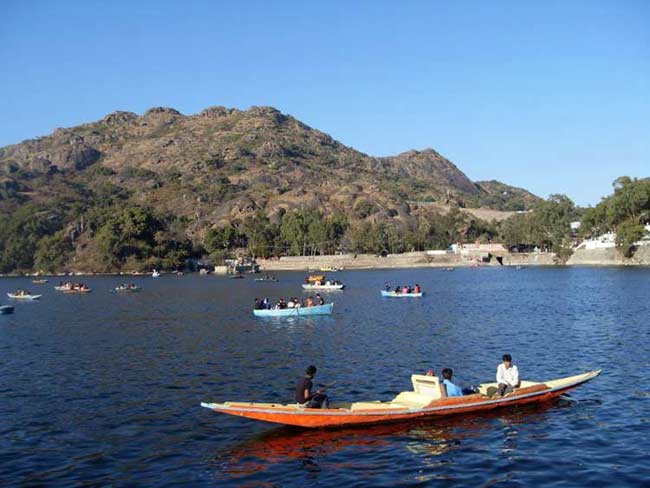
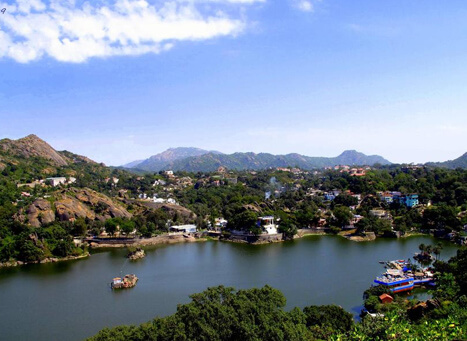
Nakki Lake, locally known as the Nakki Jheel is a paradise for nature lovers. Flanked by amazing natural wonders, this lake is truly a gem of Mount Abu. It is the first man-made lake in India with a depth of around 11,000 metres and a width of a quarter of a mile. Located in the centre of the hill station, the fascinating lake is surrounded by lush greenery, mountains and strangely shaped rocks. As you sail through the serene waters of Nakki Lake, it is exciting to see the life of Mount Abu unfolding in front of you. The blowing winds and the soothing temperature of Mount Abu will add to the pleasure of boating and is sure to win your heart.

Nakki Lake Mount Abu - Nakki Lake Mount Abu History Photos Boating

In the Nakki Lake which is associated with many legends, Mahatma Gandhi’s ashes were immersed on 12 February 1948 and Gandhi Ghat was constructed nearby. It is a perfect destination for nature lovers and photography fiends. On the other hand, the attraction is also considered as the love lake of Mount Abu since the clean blue waters with verdant surroundings give a romantic feel. It is also said to be the sacred lake for the proud Garacia Tribe. The nearby natural wonders that are visible from the lake increases its charm.

Nakki Lake History
Nakki Lake is about a half mile in length and a quarter of mile broad also has a quite interesting history as well. One historical story explained that it was dug out from nails by gods for the protection against demon ‘Bashkali’.

Nakki Lake Mount Abu Rajasthan

Another romantic history was of Rasia Balam, a sculpture of Dilwara Jain temple and Kings daughter name Kunwari Kanya. King put up the challenge of digging of the lake in one night and he will marry his daughter to that one. It is believed that Rasia Balam dug a lake overnight with his nails. Later Queen refused to marry their daughter.

Some also believed that Rasia Balam was an aged sage and was the incarnation of Lord Shiva and the teenager was the embodiment of Ma Parvati. Due to betrayal, they will again come back to complete their love. The famous poem ‘Lost Love’ describe their story very well.

Sacred Char Dham Yatra Tour Packages from Krishna India Tour

   Char Dham Yatra – A Sacred Journey Through India’s Holiest Pilgrimage Introduction The Char Dham Yatra is one of the most sacred pilgrima...